What Is RSI in Crypto?
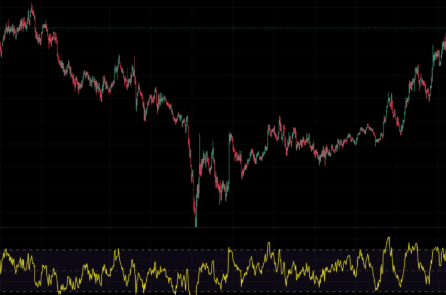
RSI in crypto is a momentum indicator that gauges the speed and magnitude of recent price moves. It compares average gains and losses over a defined window, typically 14 periods, to produce a value between 0 and 100. The metric signals potential overbought or oversold conditions but must be weighed against price action, volume, and divergences in volatile markets. Its usefulness hinges on disciplined application and data-driven confirmation, leaving important questions unresolved for those monitoring the next move.
What Is RSI in Crypto and Why It Matters
Relative Strength Index (RSI) is a momentum oscillator that measures the speed and change of price movements on crypto price charts.
The discussion focuses on RSI definitions and RSI basics, clarifying how readings inform trend strength, overbought/oversold conditions, and potential reversals.
It remains data-driven, cautious, and precise, acknowledging freedom-seeking traders while avoiding speculative claims about future market behavior.
How RSI Is Computed for Crypto Markets
RSI for crypto markets is computed using standard price data applied to a defined time window, typically 14 periods, with adaptations to account for market 24/7 trading and varying liquidity.
RSI computation relies on average gains and losses, smoothed over the window, producing RSI signals used to gauge momentum.
Crypto markets require careful calibration for volatility, liquidity, and trading interruptions.
RSI signals guide crypto trading.
See also: techguporg
Interpreting RSI Signals in Crypto Trading
Analysts assess RSI divergences to identify waning momentum and potential reversals, while RSI crossovers signal temporary trend shifts.
Interpretations rely on corroborating data, timing, and disciplined risk controls to avoid overconfidence.
Common RSI Pitfalls and How to Avoid Them
One common pitfall in RSI usage arises from overreliance on single readings without context, as brief price gaps, low liquidity, or sudden volatility can produce misleading momentum signals in 24/7 crypto markets.
To avoid distortion, analysts track RSI divergence alongside price trends, confirm with volume, and assess RSI momentum over multiple intervals, ensuring robust, contextual decisions.
See also: techguporg
Frequently Asked Questions
How Does RSI Differ Between Crypto and Traditional Markets?
RSI interpretation differs modestly: crypto exhibits higher market volatility, amplifying RSI swings and false signals. In traditional markets, RSI tends to reflect longer-term cycles more smoothly. Analysts emphasize cautious interpretation, correlating RSI with liquidity, volume, and regime shifts.
Can RSI Outperform Other Indicators in Volatile Coins?
RSI can outperform other indicators in certain volatile coins, though success depends on RSI timeframes and crypto volatility; the approach remains data-driven, cautious, and technical, appealing to a freedom-seeking audience while emphasizing empirical validation over assumptions.
Is RSI Effective in Spotting Spoofing or Wash Trading?
RSI has limited effectiveness in spotting spoofing or wash trading; its signals may reflect market manipulation risks rather than true momentum, highlighting RSI limitations, spoofing risks, wash trading signals, and market manipulation as cautions for data-driven traders.
What Time Frames Work Best for Crypto RSI Signals?
The analysis indicates what time frames for crypto signals vary; shorter frames capture rapid moves, longer frames reveal trends. Market differences affect indicator performance, with volatility shaping reliability and risk. Overall, cautious selection aligns with freedom-oriented risk tolerance.
How Do You Use RSI With Automated Crypto Bots?
RSI with automated crypto bots is used to trigger trades when overbought/oversold thresholds fire, but RSI misinterpretation remains a risk; automated signals should be backtested, risk-managed, and combined with volatility and liquidity checks for freedom-minded traders.
Conclusion
RSI in crypto provides a compact gauge of recent momentum, but its value depends on window length and data quality. In volatile, 24/7 markets, RSI can produce frequent false signals if used in isolation. An interesting stat: during major bull runs, RSI over 70 often persists longer than in traditional markets, while divergences tend to precede reversals with higher accuracy when confirmed by volume and price action. Practitioners should combine RSI with other indicators and risk controls.