
Cedar vs Heat-Treated Hemlock for a Sauna on a Budget
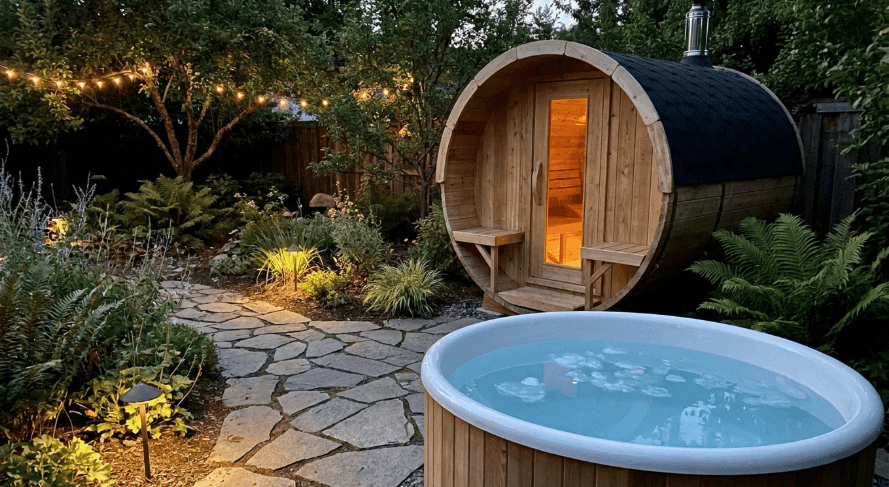
Western red cedar and heat-treated hemlock are the two most common woods in budget-friendly sauna kits, and the honest answer is that both perform well. Cedar brings a stronger natural scent, a warmer reddish tone, and a long history as the traditional choice, while heat-treated hemlock runs 10 to 25 percent cheaper on average, holds heat well once warm, and has a much milder smell. Neither wood is meaningfully worse at the core job of handling repeated heat and humidity cycles.
What Makes Western Red Cedar Different From Heat-Treated Hemlock?
Cedar is a naturally rot- and insect-resistant softwood that has been used in sauna building for generations, largely because its natural oils help it shed moisture and resist decay without any chemical treatment. Heat-treated hemlock starts as a more common, faster-growing softwood, then goes through a kiln process at high temperature that drives out moisture and alters the wood’s cell structure, making it more stable and less prone to warping in a hot, humid room. The treatment process is what gives heat-treated hemlock its performance in a sauna setting, not a natural property of hemlock on its own.
Which Wood Handles Heat and Humidity Better?
In practice, both hold up well when the room is properly ventilated between sessions. Cedar’s natural oils give it a long track record of resisting the kind of moisture damage that causes wood to rot or attract mold. Heat-treated hemlock’s thermal processing achieves a similar result through a different mechanism, reducing the wood’s moisture content and resin before it ever goes into a sauna, which some manufacturers point to as slightly better dimensional stability, meaning less warping or gapping between boards over time. Either wood still needs the same basic care: wiping down after sessions and keeping the door open to dry.
How Do Cedar and Hemlock Compare on Price?
Cedar typically commands a premium, both because of higher raw material costs and its long-standing reputation as the classic sauna wood. On a comparable kit, expect heat-treated hemlock to run meaningfully less than an equivalent cedar model, sometimes enough to matter on a mid-size cabin or barrel kit where the wood accounts for a large share of the total price. If price is the deciding factor, hemlock is where most budget-conscious buyers land, without a real compromise on how the sauna performs.
Does Wood Choice Affect Scent and Aesthetics?
This is where the two woods diverge the most. Cedar has a strong, resinous, immediately recognizable scent that many people associate with the sauna experience itself, and its reddish grain gives a warmer visual tone. Heat-treated hemlock has a much subtler, slightly toasted aroma from the thermal process, and its color tends toward a deeper, more uniform brown. Some buyers who find cedar’s scent too strong in a small, enclosed cabin actually prefer hemlock for that reason, particularly for an indoor install with limited airflow.
Which Wood Should You Choose on a Tight Budget?
If cost is the primary constraint, heat-treated hemlock delivers comparable durability and heat performance for less money, making it the more practical pick for a first sauna or a budget-focused build. If scent and the traditional look matter more to you than shaving a few hundred dollars off the total, cedar remains the classic choice for good reason. Either way, it is worth comparing actual kit prices by wood type before deciding, since the gap varies by manufacturer and can be smaller than expected on certain sizes. Checking current listings at a dedicated sauna retailer gives a clearer picture of real pricing than relying on general estimates, and a specialist source like a dedicated sauna retailer typically lists both wood options side by side for direct comparison.
Do Both Woods Work for Outdoor Barrel Saunas?
Yes, both are used in barrel construction, though cedar has the longer track record specifically for curved-stave outdoor units exposed to rain and sun. Heat-treated hemlock is increasingly common in barrel kits too, and manufacturers generally apply the same exterior sealant recommendations to both. For an outdoor unit, the sealant maintenance schedule matters more to long-term appearance than the underlying wood species.
Is One Wood Better for Allergies or Sensitivities?
People sensitive to strong wood scents sometimes report cedar’s aroma as irritating in a small, poorly ventilated space, while heat-treated hemlock’s milder smell is easier to tolerate. Neither wood is a common allergen in the way certain tree pollens are, but if scent sensitivity is a concern for anyone who will use the sauna regularly, testing a small sample board of each wood before committing to a full kit is a reasonable, low-cost step.
How Do Grain and Knots Differ Between the Two Woods?
Cedar typically shows a looser, more visible grain pattern with occasional small knots, which many buyers like for the rustic, traditional look but which can also mean slightly more surface texture to sand smooth on bench seats. Heat-treated hemlock tends to have a tighter, more uniform grain after processing, with fewer visible knots on clear-grade boards, giving a cleaner, more consistent surface right out of the kit. Neither difference affects durability, but it matters if you are picky about how the finished room looks, especially on visible upper wall panels versus lower bench sections that see more contact. Buyers building a barrel sauna, where the curved staves are the most visible feature of the whole structure, often lean toward cedar specifically for its grain character, while a boxier cabin room hides more of the wood behind benches and backrests, making hemlock’s plainer grain less of a factor in the final look.
Frequently Asked Questions
Is cedar or hemlock better for a sauna?
Both work well. Western red cedar has a stronger natural scent and slightly better rot resistance, while heat-treated hemlock is denser, holds heat a bit longer once warm, and usually costs less. Neither is objectively better across the board; the right pick depends on budget and how much scent you want in the room.
Why does heat-treated hemlock cost less than cedar?
Hemlock is a more widely available, faster-growing softwood before it goes through the thermal treatment process, which keeps raw material costs lower than cedar. Cedar’s cost also reflects its long-standing reputation as the traditional sauna wood, which supports a higher price even where the performance difference is modest.
Does heat-treated hemlock smell like anything?
It has a much milder, slightly toasted scent compared to cedar’s strong, resinous aroma. Some people who find cedar overpowering in an enclosed room actually prefer hemlock for that reason, especially in a small indoor cabin with limited ventilation.
Can you mix cedar and hemlock in the same sauna?
Yes, and some manufacturers do this deliberately, using hemlock for the bench frames or lower walls where cost matters more and cedar for visible upper paneling. It is a reasonable way to control budget without giving up cedar’s look and scent entirely.
Does wood choice affect how long a sauna lasts?
Both woods, properly maintained, commonly last 15 to 25 years in regular home use. Heat-treated hemlock’s thermal processing reduces its moisture content and resin, which some manufacturers argue improves stability, while cedar’s natural oils give it a long track record of its own in traditional sauna building.
References
- Cardiovascular and Other Health Benefits of Sauna Bathing: A Review of the Evidence, Mayo Clinic Proceedings, 2018
- Does the Combination of Finnish Sauna Bathing and Other Lifestyle Factors Confer Additional Health Benefits? A Review of the Evidence, Mayo Clinic Proceedings, 2023
- Effects of heat and cold on health, with special reference to Finnish sauna bathing, American Journal of Physiology, 2018
- UL Standards and Engagement, safety standards reference for wood and heater materialsBy Tom Bramwell